


In today’s rapidly evolving world of work, skills expire more quickly than roles. Failing to track and develop skills correctly can lead many you down the road of painful talent shortages, wasteful hiring and wasted training budgets. This is also the reason why AI skill management software has developed into a significant solution for organizations to prepare their workforce of tomorrow.
What is AI Skill Management Software?
AI skill management software is a digital tool that leverages the power of artificial intelligence to find, assess, and update the skills of an organization’s workers in real time. Instead of using static job descriptions or manual self-recording, it learns constantly from work data, learning activity and certifications and records of performance.
The end product is a fresh and realistic representation of workforce competencies based on realities, and not beliefs.
The Importance of AI Skill Management Software
Most organizations have a difficult time answering this simple question: What is it that we really know how to do? Manual tracking is slow, imprecise and not scalable. This is where AI skill management software comes in – it automates the discovery and analysis of skills.
Competencies can be examined more easily, so organisations do not need to react to shortfalls, but can plan ahead. This approach increases our agility as an organisation and supports long-term growth.
AI Skill Management Software – What to Look Out For
An Effective AI skill management application can offer the following features:
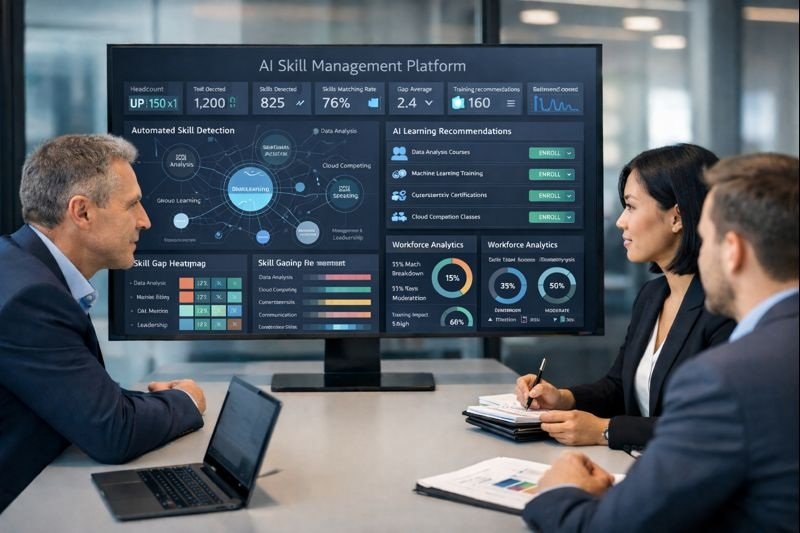
Automated Skill Identification
The platform leverages AI to recognize skills across various data sources, reducing the need for employees to continually manually update their profiles.
Skill Gap Analysis
It matches the current skills in use to what will be needed for business continuity.It Identifies that which is missing and needs upskilling, reskilling and hiring.
Personalized Learning Recommendations
“Learning paths for employees are designed according to what’s missing, so learning becomes more relevant and efficient.
Workforce Skill Analytics
Transparent dashboards provide leaders with visibility into skill distribution, levels of readiness and critical risk areas.
Internal Talent Matching
The system matches skills to projects or internal roles, which can help companies make the best of their existing talent before hiring externally.
Advantages to Using AI Skill Management Software
Firms that invest in AI skill management software reap quantifiable rewards:
- Improved workforce agility and adaptability
- Lower recruitment and training costs
- Skills developed are more closely aligned to the needs of business
- Greater staff engagement with clear lines of progression
- Better (read: data driven) WFP (Work Force Planning.)
- These benefits are critical for competing in skills-based markets.
Who Should Use AI Skill Management Software?
Here is what our AI skill management software can do for you:
- Enterprises undergoing digital transformation
- Technology and IT-focused organizations
- Consulting and professional services firms
- Big Businesses with changing and various skill requirements
AI Skill Management Software vs Traditional Skill Tracking
Traditional systems rely on static roles and self-reported data. AI skill management software is continuously updated and reflects real-world skill usage. This shift enables proactive decision-making and reduces reliance on guesswork.
Best Practices for Implementation
To maximize value:
-
Define a clear skills framework aligned with strategy
-
Integrate HR, learning, and performance systems
-
Encourage transparency and employee participation
-
Act on insights through workforce and talent planning
Technology alone creates insight; leadership action creates results.
Conclusion
In a rapidly evolving skills economy, managing skills manually is no longer effective. AI skill management software provides organizations with clarity, intelligence, and control over workforce capabilities. Companies that invest in AI skill management software are better prepared to close skill gaps, optimize talent, and build a resilient, future-ready workforce.